

Battery
How to get 20 hours from a rechargeable hand warmer: heat levels, cold air and battery care
Our up-to figures say each UNIHAND warmer runs 20 hours on Low, 14 on Medium and 8.5 on High. How close you come depends on the level you pick, the air around the unit and how you treat the battery between winters, and most of that is in your hands.
Three levels, three different days
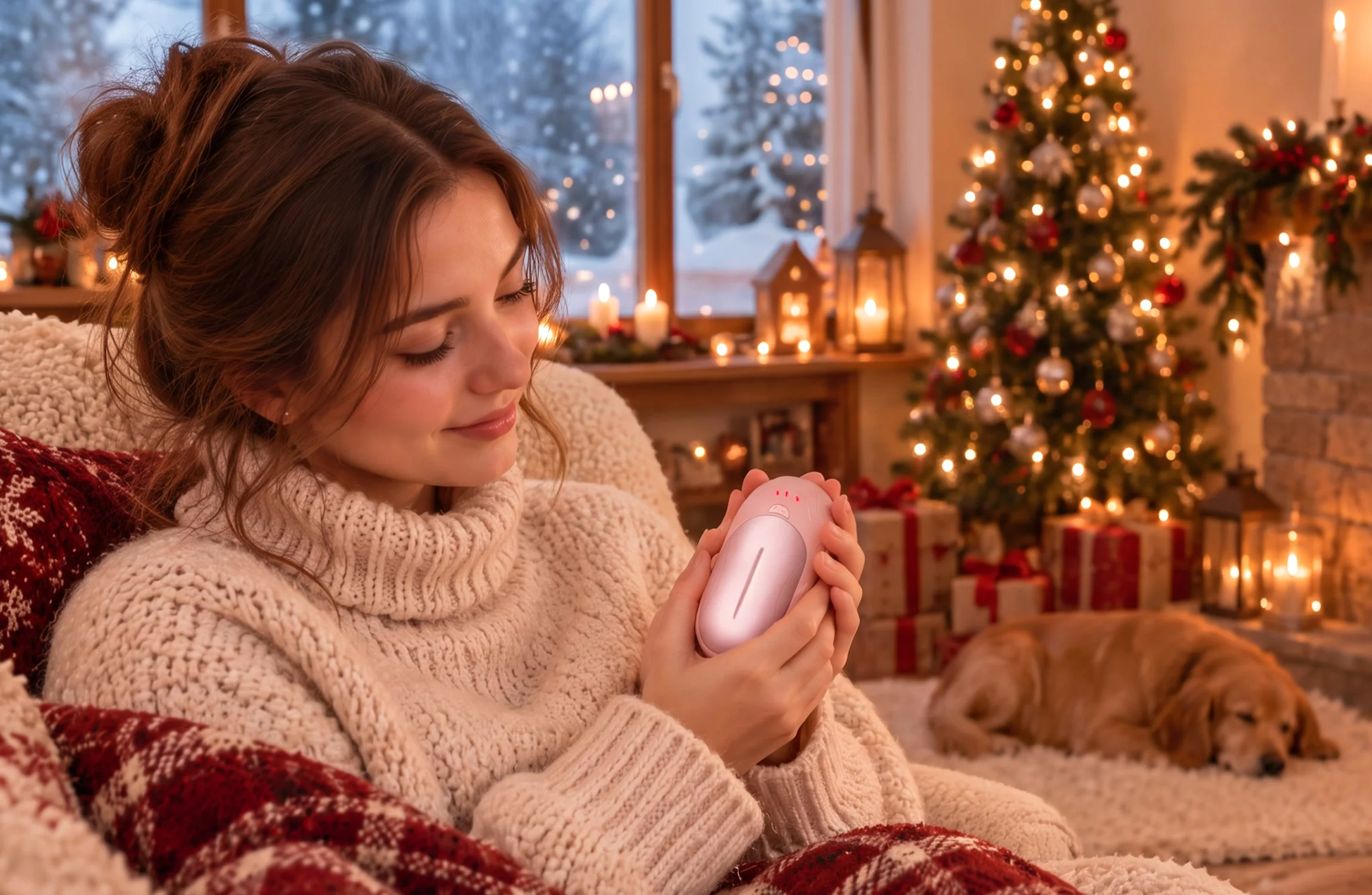
Each warmer in the UNIHAND pair has one orange button and a row of three small lights beside it. The button turns the unit on and steps it through the three levels, and the card in the box shows the exact presses. Count the red lights and you know where you are. One red light means Low, two mean Medium, three mean High. That is the whole control panel, and the choice you make with it decides how long your hands stay warm.
Low runs from 95 to 107.5 °F. It starts a little below the 98.6 °F people usually quote for body temperature, so in a pocket it reads as a steady, mild warmth rather than heat. Medium covers 104 to 118.5 °F, which you notice the moment your fingers close around it. High runs from 118.5 to 130 °F, and 130 °F is the most the unit ever reaches. The two lower ranges overlap at the edges, so a warm Low and a cool Medium can feel close on a mild day.
Inside each unit sits what we call the AI chip. It is a temperature sensor and a controller. It reads the temperature between the warmer and your hand and holds the level you chose, so the shell does not drift hotter or colder while you walk. Holding a level has a cost, and the cost is battery. The hotter the setting, the faster the charge goes.
| Level | Red lights | Temperature range | Up to | Share of one charge per hour, at the up-to figure |
|---|---|---|---|---|
| Low | One | 95-107.5 °F | 20 hours | 1/20, or 5% |
| Medium | Two | 104-118.5 °F | 14 hours | 1/14, or about 7% |
| High | Three | 118.5-130 °F | 8.5 hours | 1/8.5, or about 12% |
The hours in that table are ours, and they are ceilings. We print them as up-to figures for each level, and real days come in under them. Cold air, wind and how often you switch the unit on and off all move the number, and we come back to each of those further down. Read the last column as a rate. An hour on High spends more than twice the battery of an hour on Low.
That rate is the most useful thing to carry out the door. If you want the 20 hours, you have to spend most of the day on one red light. If you want 130 °F around frozen fingers, you are buying it with the clock. Our heat levels page shows each level beside the lights, and the instructions page walks through the button and the charge in the order you will meet them.
Plan the day as fractions of a charge
You rarely spend a whole day on one level. A morning on the lift is not an afternoon at the lodge, and a deer stand at dawn is colder than the walk back at noon. So the useful question is not how long High lasts, but how much of a charge your particular day takes.
The arithmetic is short. Divide the hours you plan at each level by that level's up-to figure, then add the results. Two hours on High is 2 divided by 8.5, about a quarter of the battery. Four hours on Medium is 4 divided by 14, a little under a third. Three hours on Low is 3 divided by 20, about a seventh. Together that ski day takes roughly two thirds of one unit's charge, and a third is left over for the drive home.
| Your day | Plan | Arithmetic | Share of one charge |
|---|---|---|---|
| Ski day | 2 h High, 4 h Medium, 3 h Low | 2/8.5 + 4/14 + 3/20 | About 0.67, two thirds |
| Dawn sit in a deer stand | 1 h High, 4 h Low | 1/8.5 + 4/20 | About 0.32, one third |
| Evening at the stadium | 1 h High, 3 h Medium | 1/8.5 + 3/14 | About 0.33, one third |
| Winter commute and a cold office | 2 h Medium, 6 h Low | 2/14 + 6/20 | About 0.44, under half |
| Eighteen holes in November | 4 h Medium, 1 h High | 4/14 + 1/8.5 | About 0.40, two fifths |
| All day on High | 8.5 h High | 8.5/8.5 | 1.00, the whole charge at best |
Every figure in that table assumes the up-to hours, so treat each share as the smallest your day can take. On a cold, windy day the same plan eats more. If a plan lands near 1.00, it will not make it to the end of the day, and you should move an hour or two down a level.
The pair gives you a second way to stretch the day. Each of the two units has its own battery. You can use one in your pocket and leave the other off in an inside pocket or a bag, then swap when the first one runs low. Run that way, one hand gets the warmth of two charges in turn. Or keep both on and join them back to back. They lock into one palm-sized warmer that heats all the way around, which suits the hour when your hands are coldest.
On a hunt, Low and one unit kept in reserve suit the long still hours. On the slopes, you might run High on the chairlift and nothing on the runs. On the course, one unit can pass between two players from hole to hole. Our pages for skiing, hunting and golf work through each of those days in more detail.
Why the same charge runs shorter in deep cold
A lithium battery is a chemical reaction in a small box, and cold slows the reaction down. Battery University puts it plainly. Cold raises a battery's internal resistance and lowers its capacity. A battery that delivers its full capacity at 80 °F (27 °C) will typically give only about half of it at 0 °F (-18 °C).
That figure describes batteries in general, not our warmer in particular, and the loss differs from one chemistry to another. It still tells you which way the day will go. On a mild autumn evening you are closer to the up-to hours. On a zero-degree morning in a tree stand, the same battery holds less to begin with.
Cold works on the warmer from the outside as well. The National Weather Service explains that wind does not make an object colder than the air around it, but it does cool the object to the air temperature more quickly. A warmer is exactly that kind of object. The controller in each unit holds the level you chose, so when wind pulls heat off the shell faster, the battery has to put more back in. A warmer held in the open on a windy ridge spends its charge faster than the same warmer closed inside a fist inside a pocket.
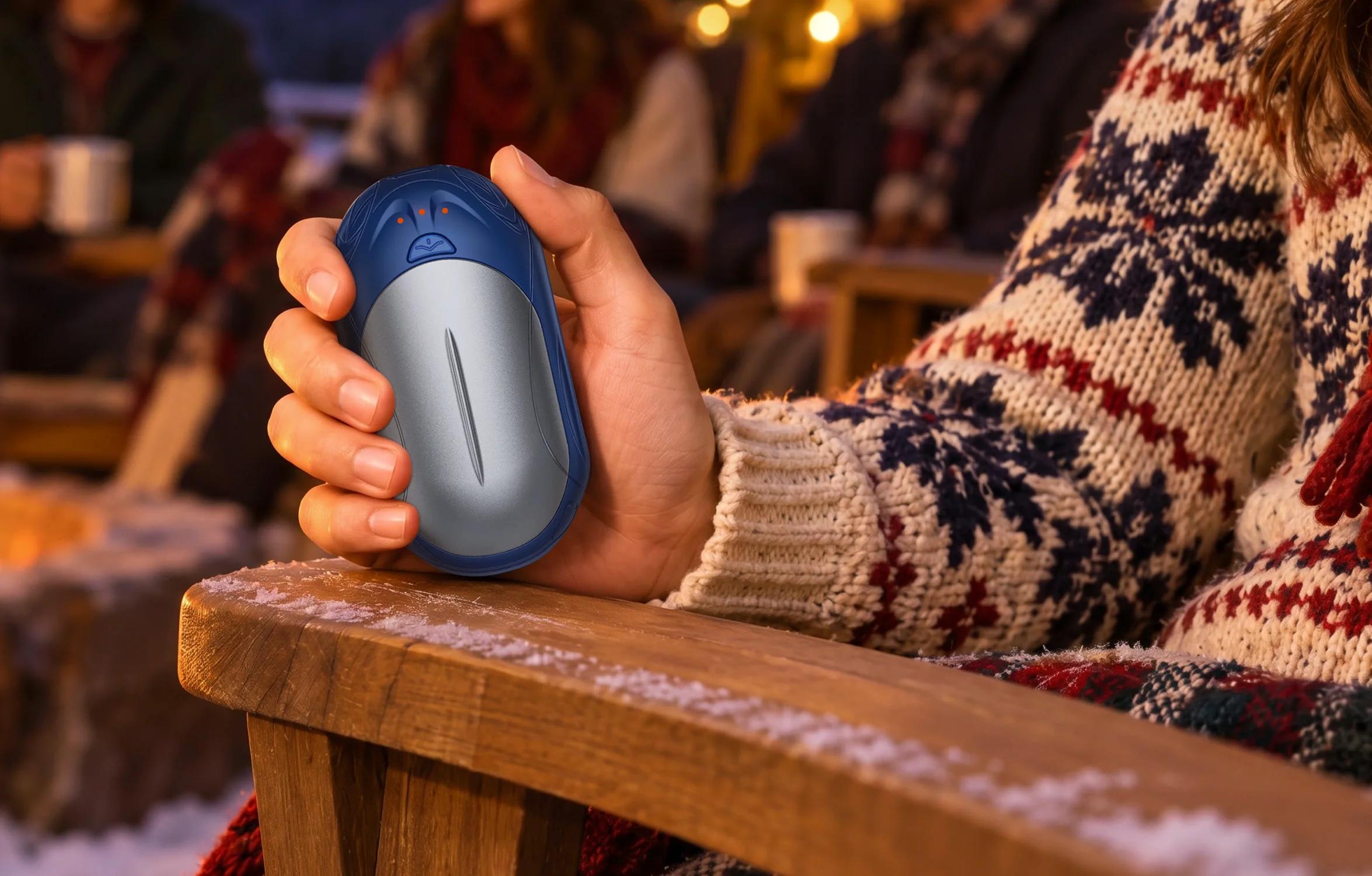
Battery University makes one more point that helps you here. A warm battery performs better than a cold one, and it mentions warming a tired phone battery in a jeans pocket for a little more runtime. A UNIHAND warmer carried close to your body keeps its own battery out of the worst of the cold. A warmer left on a car seat overnight at 10 °F starts the morning with a cold battery and a cold shell,, and its battery starts the day cold.
So plan with a margin when the forecast turns hard. Take the share from the planning table and assume the day will take more. Leave the second unit off and in reserve. Turn the active one down a level once your hands are warm, because holding warmth costs less than building it. If you want the bigger picture of dressing for the cold, our journal piece on keeping hands warm outdoors covers layers, wind and wet gloves.
Carry it where the heat stays
Where you put the warmer matters almost as much as the level you set. Heat moves from the warm shell toward whatever is colder, and the question is whether that colder thing is your hand or the winter air. Each unit is a rounded pebble 3.46 by 1.84 by 0.79 inches and weighs about 0.15 lb, small enough for a jeans front pocket or a golf-pant pocket, so you have choices.
An outer shell pocket is the weakest place. It sits outside your insulation, with one thin layer of fabric between the warmer and the wind, and much of its heat goes outward. An inside chest pocket or a pocket in a fleece under the shell keeps the warmer inside your layers. The heat it gives off stays in the air your jacket is already holding, and the wind never touches the unit. A front trouser pocket works the same way under a long coat.
Mittens and gloves treat a warmer differently too. In a glove each finger lives in its own sleeve, so a warmer in the palm touches the palm and little else. In a mitten your fingers share one pocket of air, and a warmer held among them warms that whole pocket. Our mitten photos show the glow of the unit through knitted wool, which is roughly where the heat goes. If your fingers are the part that suffers, a mitten with a warmer inside it usually serves them better than a glove.

Keep the warmer dry as well as warm. A wet glove pulls heat away from your hand fast, and a warmer sitting in one is working against water instead of air. The Federal Aviation Administration also lists exposure to water among the things that can push any lithium battery toward overheating. A dry inside pocket is the better home.
When you need the most heat in the least time, join the two units back to back. Together they make one palm-sized warmer that heats all the way around, and closing your hand over both inside a pocket wastes very little. Once you are warm, split them again, put one away switched off, and let the other carry on at a lower level.
Charging habits that add years
Each warmer charges over USB-C, and a USB-C cable comes in the box. Most of what decides how many winters the battery lasts happens at that cable, and the habits are simple.
Bring the warmer indoors and let it warm up before you plug it in. Battery University is firm on this point. Consumer lithium-ion batteries should not be charged below freezing, 32 °F (0 °C). The pack can look as if it is charging normally while metallic lithium plates onto one electrode, and that damage is permanent, to both performance and safety. Its table puts the charging range for lithium-ion at 32 to 113 °F (0 to 45 °C) and says ordinary chargers have no cold protection, so users should charge at room temperature. After a day on the slopes or a night in the truck, set the pair on the kitchen counter until the shells no longer feel cold, then charge.
Charge whenever it suits you. Battery University says partial discharge on lithium-ion is fine, the battery has no memory, and it does not need a full discharge now and then to stay healthy. It goes further and advises avoiding full discharges and charging more often between uses. Topping up a half-full warmer after an evening walk does it no harm. Running it flat every time does it no favors.
Heat is the other enemy, and it hides in summer as much as in winter. Battery University counts anything above 86 °F (30 °C) as a high temperature for lithium-ion, and calls a fully charged battery kept hot the worst case of all. Its storage article names the car dashboard and the hot sun as typical ways people cook their devices. So never charge the warmer on a dashboard, a sunny windowsill or next to a heater. Do not leave it in a parked car through a warm afternoon either.
Once it is full, unplug it. A battery that sits at full charge on the cable for days ages faster than one that comes off the cable and goes back in your pocket, and Battery University says the same of laptops left plugged in. The battery indicator on the unit shows you what remains, and the instructions page explains how to read it.
A little warmth in the shell while it charges is normal. Battery University notes that a battery's internal resistance raises its temperature slightly during charging. A unit that turns hot on the cable, rather than faintly warm, is a different matter, and the section on failing batteries below says what to do about it.
Our FAQ collects the questions people ask us most often about charging, cables and the lights.
Putting the pair away for summer
In March the pair goes into a drawer for six or seven months, and how it goes in decides how it comes out. Battery University's storage advice for lithium-ion is to store it partly charged, at around 40 percent. It adds that hitting an exact 40 or 50 percent is not important. The point is neither full nor empty.
Its numbers show why. A lithium-ion battery stored for a year at room temperature, 77 °F (25 °C), keeps about 96 percent of its recoverable capacity at 40 percent charge, but only about 80 percent if it was stored full. In a hot place the gap widens.
| Storage temperature | Stored at 40% charge | Stored at 100% charge |
|---|---|---|
| 32 °F (0 °C) | 98% | 94% |
| 77 °F (25 °C) | 96% | 80% |
| 104 °F (40 °C) | 85% | 65% |
Two habits follow from that table. Store the pair cool, and store it part full. Battery University gives 59 °F (15 °C) as the recommended storage temperature for most batteries. In a house that usually means an indoor closet or a drawer away from the stove, not the attic, the garage or the glovebox, all of which can sit well above 86 °F through a summer.
Getting to part full is easy. Charge both units, then use them for part of a last cool evening, or leave them on Low for a few hours on the counter, and switch them off with some charge still in them. The indicator lights give you a rough idea of what remains. You do not need precision here.
Do not put them away empty either. Battery University warns that a lithium-ion cell should not sit at a very low voltage for long, because damage builds inside it and it can become unstable when recharged. A unit drained to nothing in late February and forgotten until December has spent the whole summer in that state. If you find one in the drawer that will not wake at all, charge it at room temperature and watch it closely the first time.
In autumn, before the first cold week, take the pair out, charge both units fully at room temperature and run each one for a few minutes on every level. You will know before the first frosty morning that both are ready, rather than finding out at the bus stop.
Signs a battery is failing
Every rechargeable battery loses capacity as it ages, and a warmer is no exception. Battery University describes the normal course. Packs do not die suddenly, the runtime gradually shortens as capacity fades. If your Low setting covered a full workday three winters ago and now gives out mid-afternoon, that is ordinary aging. Plan your days with smaller shares, keep the second unit in reserve, and carry on.
Damage looks different, and it calls for a different answer. The Federal Aviation Administration explains that any lithium-ion battery can overheat and run into thermal runaway, and that damage, overheating, water, overcharging or a manufacturing defect can set it off. It asks passengers to tell the crew at once if a battery or device is overheating, expanding, smoking or burning. The Battery Network, the recycling program formerly called Call2Recycle, defines a damaged lithium-ion battery as one that is swollen, leaking, overheating or punctured.
Translated to a hand warmer, stop using a unit if you notice any of these:
- The shell bulges, the two halves start to separate, or the unit no longer sits flat on a table.
- It turns hot on the charging cable, well past the faint warmth of normal charging.
- It smells of chemicals or burning, hisses, or shows smoke at any point.
- It has been crushed, cracked or punctured, for example under a car seat rail or a boot.
- It gets hot when it is switched off, or will not switch off at all.
If you see one of those signs, unplug the unit, switch it off if you can, and set it on a hard surface away from anything that burns. Do not charge it again and do not carry it in a pocket. The EPA advises contacting the device maker for handling instructions when a lithium-ion battery is damaged, so write to us through the contact details on our FAQ and keep the unit apart from your other things until you hear back.
Do not drop a damaged unit into a regular battery bin either. The Battery Network says swollen, leaking or overheating batteries need special packaging and cannot be dropped off with other batteries. The recycling section below covers the healthy units that have simply reached the end of their winters.
Flying with the pair
Rechargeable warmers fly well, as long as you pack them the way the rules ask. The Federal Aviation Administration covers them under portable electronic devices with lithium batteries. Passengers can carry such devices for personal use in carry-on baggage within the watt-hour limits, and the FAA notes that its 100 Wh limit for lithium-ion covers nearly all the batteries ordinary people use.
Carry-on is the better place for the pair. The FAA recommends that lithium-ion batteries travel in the cabin, where crews are trained to recognize and handle a battery fire, rather than in the hold, where nobody can see one. A rechargeable device may go in a checked bag only if it is completely powered off and protected from switching on by accident. A warmer that starts heating in a suitcase is exactly what that rule exists to prevent.
So on travel day, switch both units off and put them in your jacket or your cabin bag. The button sits on the face of each unit, so pack them where nothing presses on that face, for instance in their box or a small pouch, rather than loose under heavy clothes. If a gate agent takes your cabin bag to check it planeside, take the warmers out and keep them with you.
Airlines can set stricter rules than the FAA, and some do for batteries and chargers, so look at your carrier's page before an international trip. At the checkpoint the final word belongs to the TSA officer. The FAA rule on damage applies here as well. A damaged or recalled battery-powered device must not go aboard in carry-on or checked baggage, so leave a swollen or cracked unit at home.
Once you land somewhere cold, the habits from earlier still hold. A warmer that rode in a cold cargo van or sat in a frozen rental car should warm up indoors before it charges. And the planning arithmetic works on a travel day too. A long gate wait and a cold jet bridge are two hours of Low, a tenth of one unit's charge. On a day like that, when an outlet is never near, the UNIHAND pair carries two charges instead of one.
When the pair is done: recycling it the right way
Years from now a unit will hold too little charge to be worth carrying, and its battery still needs a proper end. The EPA is clear that lithium-ion batteries, and devices with them inside, do not belong in household garbage or curbside recycling bins. In a garbage truck or a sorting plant a battery can be crushed and start a fire. The EPA treats this as a real problem at waste and recycling facilities.
Instead, the EPA points devices like ours toward certified electronics recyclers, store take-back programs or your local household hazardous waste collection. It names two locators, Earth911 and Call2Recycle, now known as The Battery Network, which runs drop-off sites across the country. Look up your ZIP code before you go, because not every site takes every kind of battery.
Prepare the units before you drop them off. The EPA asks for each battery or device in its own plastic bag, and The Battery Network explains why. A used battery may be too weak to run a device and still hold enough charge to spark against metal or another battery. A clear zip bag for each warmer is enough.
- Switch both units off.
- Put each warmer in its own clear plastic bag.
- Find a drop-off site with the Call2Recycle (The Battery Network) or Earth911 locator, or ask your local household hazardous waste program.
- Hand the bags in. Keep the USB-C cable for the next pair.
A unit that is swollen, leaking or overheating is the exception, as the section above explains. It needs special packaging and cannot go into an ordinary collection bin, so contact us and the collection site first. A unit that was recalled is not accepted at Battery Network sites at all, and its maker's instructions come first.
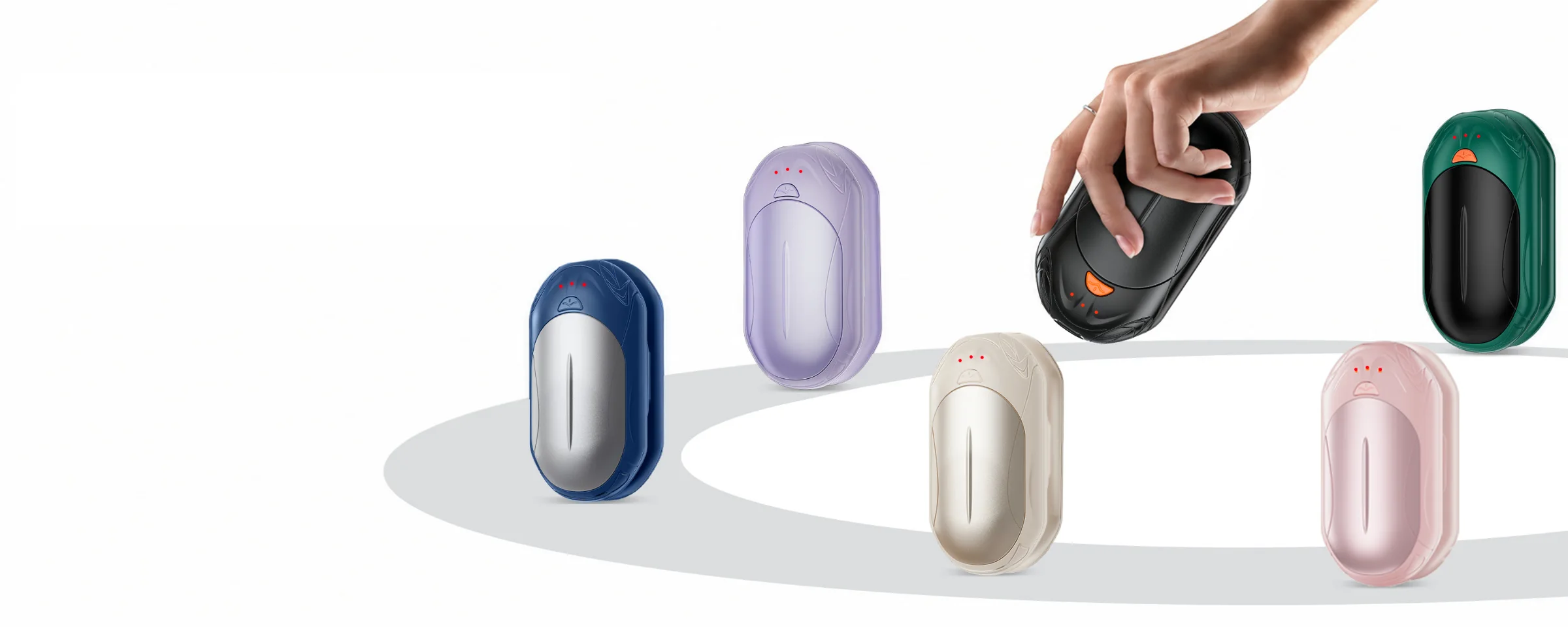
If you are weighing a rechargeable pair against single-use packets in the first place, our journal piece on rechargeable vs disposable hand warmers sets them side by side, and our comparison page goes further. When it is time for a new pair, all ten colors sit together on one page.
