

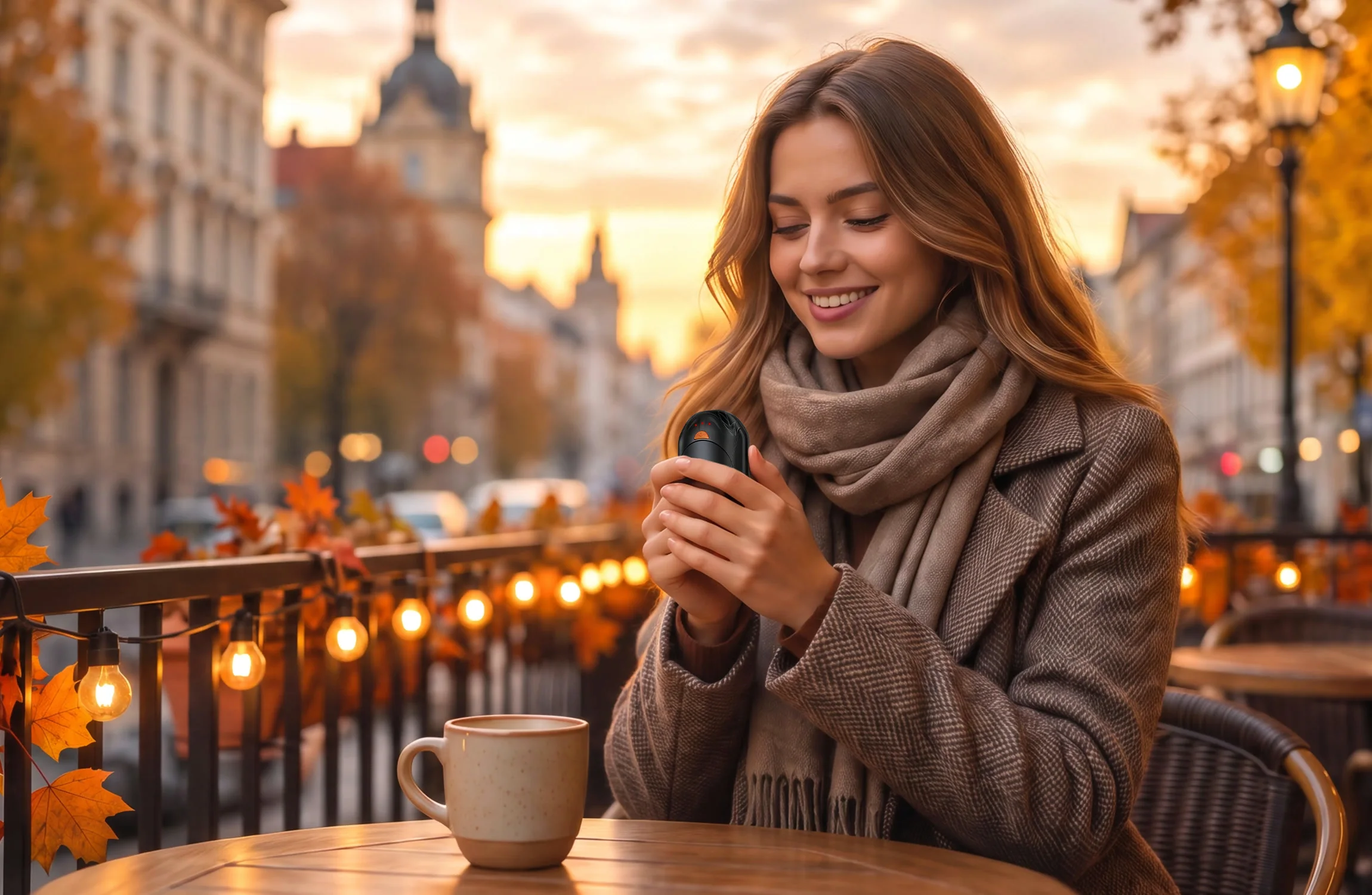
Outdoors
Keeping your hands warm outdoors: golf, hunting, ski days and stadium seats
Your fingers usually give up first on a cold day, and a breeze speeds that up. Dress your hands in layers, keep a warmer where your hand already rests on the tee, in the stand, on the lift or in the bleachers, and learn the signs that mean it is time to go inside.
Why your hands get cold before the rest of you
Spend long enough outside in the cold and your body starts making choices on your behalf. The National Weather Service puts it plainly. To protect the vital organs inside, the body cuts circulation to the extremities, meaning your feet, hands and nose. The National Institute of Arthritis and Musculoskeletal and Skin Diseases (NIAMS) describes the same reflex from the inside. When you are exposed to cold, the blood vessels in the surface layer of the skin narrow and move blood toward vessels deeper in the body, which slows the loss of heat.
That trade protects your heart and lungs, and your fingers pay for it. Your hands also spend the day closed around cold things, from a club grip and a rifle stock to a ski pole, a phone, a stadium rail and a steering wheel. CDC lists the fingers among the extremities where frostbite usually shows up, alongside the nose, ears, cheeks, chin and toes. So when the rest of you feels fine in a good coat, your hands can already be stiff, slow and clumsy with a zipper.
The Weather Service names three habits that tighten the squeeze. Caffeine constricts blood vessels and keeps your extremities from warming. Cigarettes restrict the blood flow to your hands. Alcohol reduces shivering, one of the ways your body warms itself. If your hands are always the first to go numb, those three are worth knowing about before a long day outdoors, along with the NWS advice to drink plenty of fluids.
A hand warmer works at the other end of the problem. It does not change what your blood vessels do, and we make no claim that it does. It gives your hand a warm surface to close around and a warm pocket to come back to. Each warmer in the UNIHAND pair has a temperature sensor and controller inside that reads the temperature between the warmer and your hand and holds the level you picked. Low runs at 95-107.5 °F, Medium at 104-118.5 °F and High at 118.5-130 °F. One red light means Low, two mean Medium and three mean High, and our heat levels page sets the three side by side with our up-to running times for each.
Wind chill: why a breeze changes the whole day
The thermometer tells you how cold the air is. The National Weather Service defines wind chill as how cold people and animals feel when outside, based on the rate of heat loss from exposed skin caused by wind and cold. As the wind picks up, it draws heat from the body and drives skin temperature down, and eventually the temperature inside the body follows.
The NWS gives one example in plain numbers. At 0 °F with a 15 mph wind, the wind chill is -19 °F, and at that wind chill exposed skin can freeze in 30 minutes. Milder days follow the same arithmetic. Run the formula printed on the same NWS page and a 30 °F morning with a 15 mph breeze feels like 19 °F. A 20 °F afternoon with a 25 mph wind feels like 3 °F, colder than the air by seventeen degrees.
| Air temperature | Wind 5 mph | Wind 15 mph | Wind 25 mph |
|---|---|---|---|
| 40 °F | 36 °F | 32 °F | 29 °F |
| 30 °F | 25 °F | 19 °F | 16 °F |
| 20 °F | 13 °F | 6 °F | 3 °F |
| 10 °F | 1 °F | -7 °F | -11 °F |
| 0 °F | -11 °F | -19 °F | -24 °F |
A few lines on that page change how you plan a day. The index only applies at or below 50 °F with wind above 3 mph, and it assumes no sun. Bright sunshine may raise the wind chill by 10 to 18 °F. So a still, clear afternoon on the slope feels nothing like the same reading on a gray, windy morning. Wind has a limit too. The NWS says frostbite needs an actual air temperature below freezing. Hypothermia follows different rules. CDC says it can occur even above 40 °F if you become chilled from rain, sweat or cold water.
The Weather Service also notes that its wind chill tests were done on adults, and it asks you to be even more cautious with children, older people and anyone in poor health. For your own hands, the lesson is short. Wind hurts most where skin is bare or wet, and hands are often both. The NWS asks you to seek shelter from the wind where you can, so a pocket, a mitten or a muff is a windbreak first and a heater second.
Wind costs battery as well. Our hours for each level are up-to figures, and cold air, wind and how often you switch the unit on all change them. On a windy day, keep the warmer inside a pocket and close the pocket rather than holding it out in the open air.
Layering for hands: mittens, liners and staying dry
Start with what you wear, because a warmer can only add heat to a hand that is holding on to some. The NWS advice for going out in the cold is to dress in layers, cover exposed skin and cover every part of the body, fingers included. It adds a line worth remembering when you stand in the store aisle: mittens are better than gloves. With your fingers together inside one mitten, they warm the same pocket of air instead of each sitting in its own cold sleeve.
NIOSH, the federal agency that studies cold stress at work, makes the same point for the whole body. Wear several layers of loose clothing for better insulation, protect your ears, face, hands and feet, and carry extra socks, gloves and a hat. It also warns against touching cold metal surfaces with bare skin. For your hands, that adds up to a simple system. A thin glove liner goes underneath, so you can pull the mitten off to tie a knot, load a gun or unlock the car without putting bare skin on cold metal. A loose mitten goes over it. Keep the fit roomy. NIOSH notes that some clothing restricts movement, which can be dangerous, so the mitten you pick should still let you work a zipper, a trigger or a pole strap.
Dry matters as much as thick. The NWS says to keep your skin dry and, once you are back inside, to change into dry clothing right away if you are wet. Sweat from the walk to the stand, snow packed into a cuff on the lift and a damp glove on the golf cart all pull heat out of your hand. Wet is colder than cold. A spare pair of liners in a zip bag weighs almost nothing and turns a miserable last hour into a comfortable one.
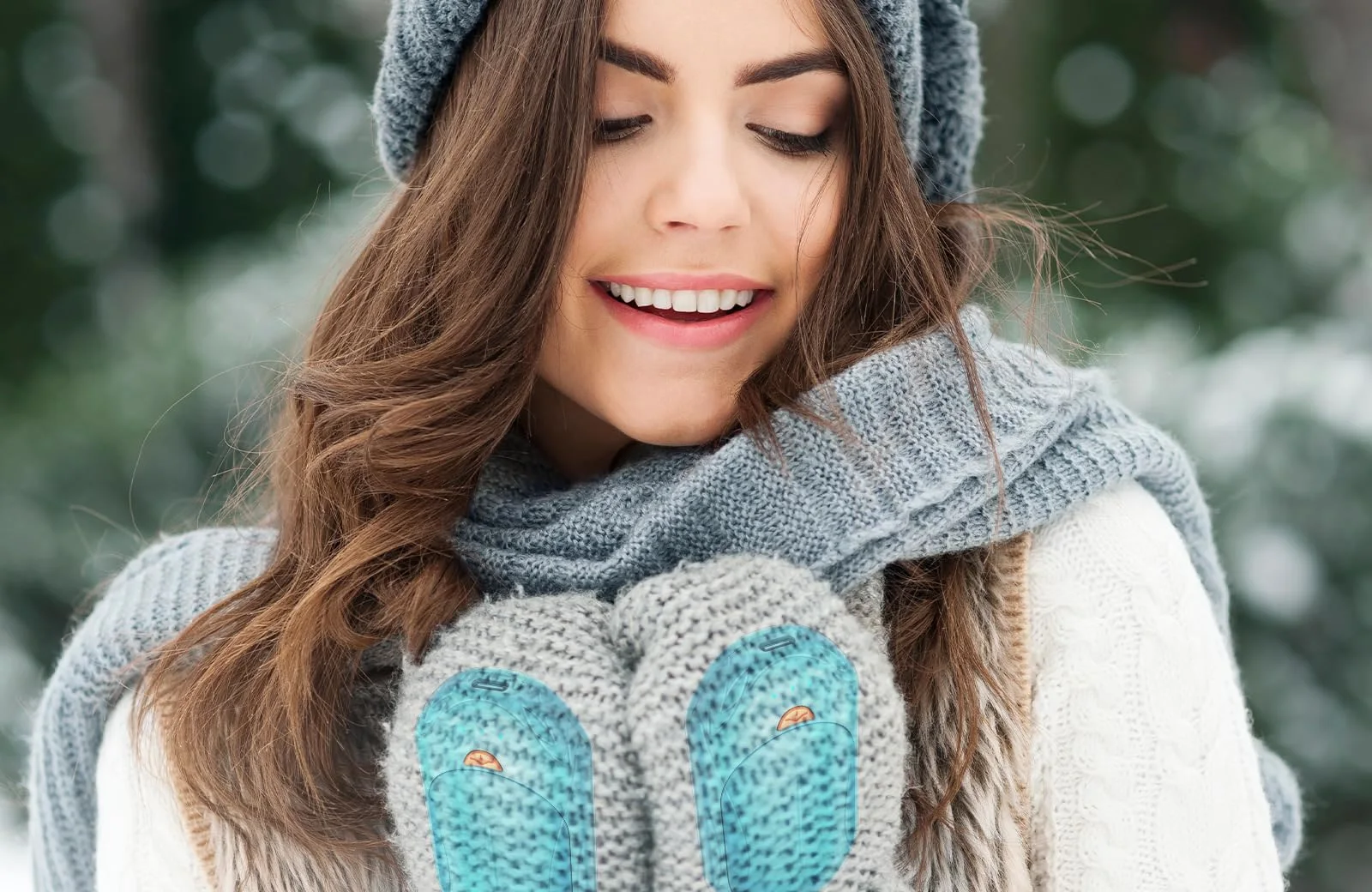
This is where the warmer fits into the layers. Each UNIHAND unit measures 3.46 x 1.84 x 0.79 inches and weighs 0.15 lb, so one rides in the palm of a mitten or in a jacket pocket without pulling the fabric out of shape. Inside a mitten, start on Low or Medium, because the mitten holds the heat close and you need less of it. The orange button turns the warmer on and steps through the three levels, and the card in the box shows the exact presses. Our instructions page walks through charging and switching levels before your first cold morning.
Golf: warm hands between shots
A cold round of golf is mostly walking, waiting and standing on tees, with a few seconds of work in between. Your hands spend those few seconds on a cold grip and the rest of the time looking for somewhere warm to go. A warmer in your pocket gives them that place. Slide your hand in after each shot, keep it there while your partners play and take it out when you pull a club.
Weight matters on a course in a way it does not in a deer stand. At 0.15 lb, a UNIHAND warmer disappears into the front pocket of golf pants, and you can carry one in each pocket so both hands get a turn. Because the two units are separate, you can also hand one to the player you are walking with and keep the other for yourself.
Think about your glove hand separately. If you wear a glove on one hand, that hand stays covered but can turn damp inside the leather, and a wet glove loses heat quickly, as the NWS dry-skin advice suggests. The bare hand gets cold faster in the wind. Give each a different job. The bare hand lives in the pocket with the warmer between shots. The gloved hand gets a few minutes in the other pocket, or the glove comes off and dries on the cart while you walk to the green.
Pick your level before you tee off. Medium is a comfortable middle for most cold rounds, and our up-to figure on Medium is 14 hours, far more than a round asks of it, although cold and wind will shorten it. Switch to High for the walk to the first tee on a frosty morning and back down once your hands feel normal. Keep the warmer out of your grip while you swing, and keep it away from your golf balls too: Rule 4.2a of the Rules of Golf from The R&A names heating as one way of deliberately altering a ball, and a stroke at such a ball means disqualification. A warm, dry hand on the club is the goal, and our page on hand warmers for golf adds a few more course habits.
On a very cold day, put the two units together back to back between holes. They join into one palm-sized warmer that heats all the way around, and the cart ride becomes a few minutes of warming both hands at once. Pull them apart again at the next tee so each pocket has its own.
Hunting: the long sit in a stand or blind
Hunting asks the opposite of golf. You work hard on the walk in, then sit nearly still for hours. That pattern is a recipe for cold hands. You arrive warm and a little sweaty, the sweat cools in your layers, and the cold arrives while you are trying to stay quiet. CDC names people who stay outdoors for long periods, hunters among them, as frequent victims of hypothermia. It also notes that hypothermia can set in above 40 °F if you are chilled from sweat.
So plan the sit before the walk. Carry your warm layers in your pack, open your jacket on the way in and put the extra layer on when you settle. Change into dry liners if the ones you walked in are damp. Then start the warmers.
Low is the level for the long sit. It holds 95-107.5 °F, and our up-to figure on Low is 20 hours, the longest of the three. A hand muff or a deep jacket pocket keeps the warmer out of the wind and lets your shooting hand rest on it until you need it. Put the second unit in your other pocket and swap them every hour or so, or keep one for your hands and the other inside your jacket near your chest. You give up some heat on Low, and in return it draws the battery down most slowly of the three.
Watch your hands as a signal, not just a discomfort. Among the warning signs of hypothermia, CDC lists fumbling hands next to shivering, exhaustion and confusion. If you find yourself dropping things or struggling with a release or a safety you work every day, take that seriously. Warm up, eat, drink something warm and nonalcoholic, and climb down if the shaking does not stop. Our page on hand warmers for hunting covers carrying a pair through a full day in the field.
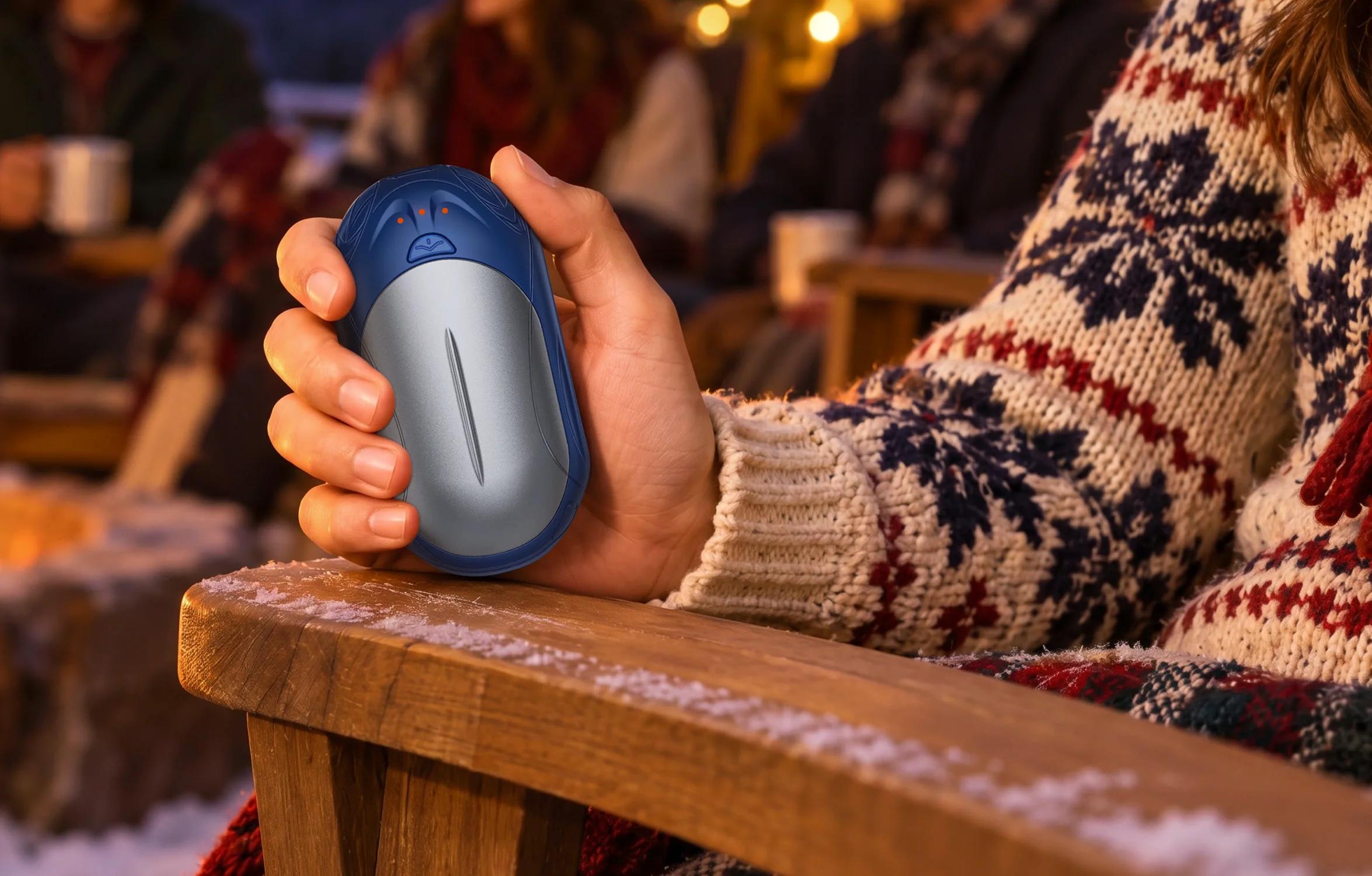
Back at camp, the fire takes over and the warmers can rest. Charge them over USB-C with the cable from the box so they start the next morning full.
Skiing and snowboarding: lifts, wind and an inside pocket
On the slope your hands get cold in a different way. On the run down you are working and warm. On the lift you sit still, high off the ground, in the wind, with gloves that may already be wet from a fall or from brushing snow off a binding. That is wind chill in its purest form. Look at the table above, then think of a chair hanging in the open above the trees, with nothing between you and the breeze.
The NWS says frostbite can happen in minutes on the extremities, especially fingers, toes, nose and ears. That does not mean every lift ride is dangerous. It means the lift is where to pay attention to your fingers, not the fast part of the run.
Carry the warmer in an inside jacket pocket. Close to your body it stays warm, it stays out of the snow, and it does not fly out of an open hip pocket when you fall. On the lift, take a glove off, hold the warmer for the ride, then put the glove back on before you unload so you are not getting off the chair with a bare hand.
Do not tuck the warmer inside your glove against bare skin on High and leave it there for the run. High holds 118.5-130 °F, and cold fingers are poor judges of how hot something is. CDC warns that numb skin can burn easily, and the NWS says you can burn yourself before feeling returns. Medium in a pocket, and a hand that comes to the warmer, is the better habit.
Wet gloves are the other ski-day problem. If yours soak through at lunch, the warmer is good for drying your hands, but it will not dry a glove. Put on the spare pair from your pack and let the wet ones hang in the lodge. The sunny afternoon NWS mentions works in your favor here too. Plan your longest lift rides for the brighter part of the day when you can. Our page on hand warmers for skiing collects a few more slope habits.
Stadium seats and winter commutes: one unit, two people
A late-season football game or a night at an outdoor rink is the hunting stand all over again, only louder. You sit for hours on a cold seat with very little movement, and the bench, the rail and the cup holder are all cold metal. NIOSH advises against touching cold metal with bare skin, which in a stadium mostly means keeping your gloves on and bringing a cushion.
This is where the 2-in-1 design earns its place. The pair comes as two separate warmers. Give one to the person beside you and you each have your own. Or put the two together back to back and they join into one palm-sized warmer that heats all the way around. Two people can share it between their hands, or one person can hold it in both palms during a long timeout. You can set each unit to its own level, so the person who runs cold can take High while you stay on Medium.

Food and drink change the evening too. The NWS notes that alcohol reduces shivering, one of the body's ways of warming itself, and it recommends hot food and warm drinks several times through a cold day. A cup of hot chocolate at halftime warms your hands from the outside and the rest of you from the inside.
Commutes are short, cold and repeated, and they often start at the worst hour. The NWS says the coldest part of the day is typically the early morning. A walk to the train, a wait at a bus stop or ten minutes scraping a windshield are exactly the moments when High makes sense, because you need heat fast and only for a little while. Our up-to figure on High is 8.5 hours, and a morning and an evening commute use only part of it, though cold and wind shorten that figure. The NWS winter car kit list includes warmers for body, hands and feet next to blankets and a spare phone charger, and a charged warmer in the glove box belongs on that list. If you want a pair in a color that is easy to spot in a bag, our color page shows all ten, from Black to the Pink pair.
Matching the level to the day
Every activity above has a working part and a still part, and your hands need help in the still part. Choose the level for how long that part lasts and how much wind you face, not for the number on the thermometer. The table pulls the four days together. The hours are our up-to figures for each level, not a promise. Cold air, wind and switching the unit on and off all change them.
| Activity | Starting level | Where to carry it | The still part of the day | Our up-to figure on that level |
|---|---|---|---|---|
| Golf | Medium | Front pocket of golf pants, one per pocket | Waiting on tees and greens | Up to 14 hours |
| Hunting | Low | Hand muff or deep jacket pocket, the second unit near your chest | Hours of sitting in a stand or blind | Up to 20 hours |
| Skiing and snowboarding | Medium | Inside jacket pocket, held on the lift | Lift rides and lift lines | Up to 14 hours |
| Stadium seats | Medium, or the two units joined | In your hands or shared with the person beside you | The whole game on a cold seat | Up to 14 hours |
| Winter commute | High | Coat pocket, glove box for the car | Waiting at the stop or scraping the windshield | Up to 8.5 hours |
Two habits get the most out of a charge. Start a level lower than you think you need and move up only if your hands stay cold, because every step up shortens the day. And charge the night before, every time, with the USB-C cable from the box. The warmer that left the house full is the one still running at the end of the day.
Pocket warmers also come as single-use packets that you throw away at the end of the day. If you are weighing the two for a season of these days, our rechargeable vs. disposable comparison sets them side by side. Our notes on how to get 20 hours from a rechargeable hand warmer go further into level choice and charging.
Warning signs of frostbite and hypothermia
The rest of this page is general information on cold-weather health, written so you know what to watch for. It is not medical advice, and it does not replace a doctor, a first aid course or a call for help.
Frostbite and hypothermia are different problems, and CDC describes both. Frostbite is an injury caused by freezing. It takes away feeling and color in the affected area, usually the fingers, toes, nose, ears, cheeks or chin, and severe cases can lead to amputation. Hypothermia is a body temperature that is too low. It affects the brain, so a person may not realize it is happening. CDC also notes that someone with frostbite may not know it until another person points it out, because the frozen skin is numb. On a cold day outside, look at each other's faces and hands.
| Frostbite | Hypothermia | |
|---|---|---|
| First signs | Redness or pain in any skin area may mean frostbite is beginning | Shivering, exhaustion or feeling very tired |
| Further signs | A white or grayish-yellow skin area, skin that feels unusually firm or waxy, numbness | Confusion, fumbling hands, memory loss, slurred speech, drowsiness |
| What CDC says to do | Get out of the cold, seek medical care, check for hypothermia too | Take the person's temperature, and below 95 °F get medical attention immediately |
| Warming | Warm, not hot, water, or body heat such as an armpit, with no rubbing or massage | Warm the center of the body first, chest, neck, head and groin, and remove wet clothing |
If you see frostbite signs and no medical care is near, CDC says to get the person into a warm room and put the affected areas in warm water. The water should feel comfortable to skin that is not affected. If there is no warm water, use body heat, such as an armpit for frostbitten fingers. CDC is clear about one thing that concerns every hand warmer. Do not use a heating pad, heat lamp or the heat of a stove, fireplace or radiator, because the affected areas are numb and can easily burn. A hand warmer is a heat source of the same kind. Keep it away from skin that shows frostbite signs, and do not use it to rewarm frozen fingers. The NWS adds that a hot water bottle or a hair dryer belongs on the same list.
Hypothermia is a medical emergency. CDC says to warm the center of the body first, give warm nonalcoholic drinks only to someone who is awake, and get medical help as soon as possible. The NWS puts the order plainly: call an ambulance first, then start warming the person.
When your hands cannot tell you how hot it is
A warmer is safe to hold only when your hand can report back. Some people's hands cannot do that well, and for them the advice is different.
Diabetes is the most common reason. The National Institute of Diabetes and Digestive and Kidney Diseases (NIDDK) says nerve damage from diabetes can affect the feet, legs, hands and arms, and that people with this damage may have problems sensing pain or temperature in those areas. For the feet, NIDDK warns that you may burn yourself and not know you did, and it says not to put a hot water bottle or heating pad on them. The same reasoning applies to hands that cannot feel heat properly. If you have diabetes, nerve damage or any condition that leaves your hands numb, do not keep a warmer against your skin, and ask your doctor if you should use one at all.
Raynaud's phenomenon is the other condition people ask us about. NIAMS describes it as a condition in which the blood vessels in the hands and feet react to cold or stress by narrowing quickly and staying narrowed, so the fingers turn white, then blue, and feel cold and numb. Among the lifestyle steps it lists for living with Raynaud's, NIAMS says to keep the hands and feet warm, and the core of the body too, meaning the chest, abdomen and head. It also says to dress in layers, wear a hat and consider heated gloves or hand warmers. It also notes that cold, stress, smoking and some medicines can bring on attacks, and it says to talk with your doctor about the medicines you take.
We want to be plain about what that does and does not mean. A UNIHAND warmer does not treat, prevent or cure Raynaud's, frostbite, poor circulation or any other condition. NIAMS lists hand warmers among ways to keep warm, and that is all. If you have Raynaud's, especially the secondary form that NIAMS calls more serious, your doctor is the right person to say how a warmer fits into your winter. The same goes for anyone the NWS asks you to be more careful with, including children and older adults.
For everyone else, the rules are short. Hold the warmer instead of strapping it to skin. Start on Low or Medium. Turn it down or put it away the moment it feels too hot. On the next cold morning, pick up your UNIHAND hand warmers, set one level and put the other unit in your partner's pocket.
